Exercises: Summarizing Data Sets
Show your work. Always state units when interpreting your answers.
Warm-Up: Review What You Know
These problems review skills you need for data summaries.
A measure of center summarizes data with a single representative number. Which of these is a measure of center?
A student collects 5 test scores: 12, 7, 15, 4, 9. What is the sum of all five scores?
Five students scored 70, 80, 90, 85, and 75 on a quiz. A classmate says 'the typical score is about 80.' Which operation would let you check this claim by finding the exact average?
Fluency Practice
Compute each summary statistic. Show your work step by step.
Data set: {8, 10, 12, 14, 16}. Find the mean.
Data set (sorted): {5, 8, 11, 14, 17, 20}. This data set has ̲ ̲ ̲ ̲ ̲ ̲ ̲ ̲ ̲ ̲ ̲ ̲ ̲ ̲ ̲ ̲ ̲ ̲ ̲ ̲ ̲ ̲ values (even count). The two middle values are ̲ ̲ ̲ ̲ ̲ ̲ ̲ ̲ ̲ ̲ ̲ ̲ ̲ ̲ ̲ ̲ ̲ ̲ ̲ ̲ ̲ ̲ and ̲ ̲ ̲ ̲ ̲ ̲ ̲ ̲ ̲ ̲ ̲ ̲ ̲ ̲ ̲ ̲ ̲ ̲ ̲ ̲ ̲ ̲ . The median = average of these two = ̲ ̲ ̲ ̲ ̲ ̲ ̲ ̲ ̲ ̲ ̲ ̲ ̲ ̲ ̲ ̲ ̲ ̲ ̲ ̲ ̲ ̲ .
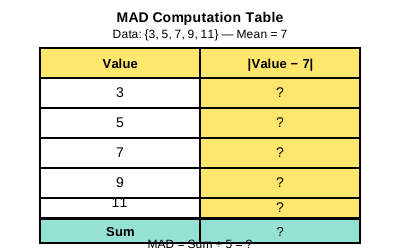
Data set: {3, 5, 7, 9, 11}. Mean = 7.
Compute MAD step by step. Fill in the absolute deviations from the mean:
|3 − 7| = ̲ ̲ ̲ ̲ ̲ ̲ ̲ ̲ ̲ ̲ ̲ ̲ ̲ ̲ ̲ ̲ ̲ ̲ ̲ ̲ ̲ ̲ , |5 − 7| = ̲ ̲ ̲ ̲ ̲ ̲ ̲ ̲ ̲ ̲ ̲ ̲ ̲ ̲ ̲ ̲ ̲ ̲ ̲ ̲ ̲ ̲ , |7 − 7| = ̲ ̲ ̲ ̲ ̲ ̲ ̲ ̲ ̲ ̲ ̲ ̲ ̲ ̲ ̲ ̲ ̲ ̲ ̲ ̲ ̲ ̲ , |9 − 7| = ̲ ̲ ̲ ̲ ̲ ̲ ̲ ̲ ̲ ̲ ̲ ̲ ̲ ̲ ̲ ̲ ̲ ̲ ̲ ̲ ̲ ̲ , |11 − 7| = ̲ ̲ ̲ ̲ ̲ ̲ ̲ ̲ ̲ ̲ ̲ ̲ ̲ ̲ ̲ ̲ ̲ ̲ ̲ ̲ ̲ ̲ .
Sum of absolute deviations = ̲ ̲ ̲ ̲ ̲ ̲ ̲ ̲ ̲ ̲ ̲ ̲ ̲ ̲ ̲ ̲ ̲ ̲ ̲ ̲ ̲ ̲ . MAD = sum ÷ 5 = ̲ ̲ ̲ ̲ ̲ ̲ ̲ ̲ ̲ ̲ ̲ ̲ ̲ ̲ ̲ ̲ ̲ ̲ ̲ ̲ ̲ ̲ .
Data set (sorted): {12, 15, 18, 21, 24, 27, 30, 33, 36}. Find the IQR.
A student computes the 'average deviation' by finding each value's distance from the mean but forgets absolute values. She adds the signed deviations: (3−7) + (5−7) + (7−7) + (9−7) + (11−7) = (−4)+(−2)+0+2+4 = 0. She concludes 'the average deviation is 0, meaning the data has no variation.' What went wrong?
Mixed Practice
Apply summary statistics in varied contexts.
A student surveyed 8 classmates about hours of sleep last night. The values were: 6, 7, 7, 8, 8, 9, 9, 10. The data set contains ̲ ̲ ̲ ̲ ̲ ̲ ̲ ̲ ̲ ̲ ̲ ̲ ̲ ̲ ̲ ̲ ̲ ̲ ̲ ̲ ̲ ̲ observations. The attribute measured is ̲ ̲ ̲ ̲ ̲ ̲ ̲ ̲ ̲ ̲ ̲ ̲ ̲ ̲ ̲ ̲ ̲ ̲ ̲ ̲ ̲ ̲ . The typical unit is ̲ ̲ ̲ ̲ ̲ ̲ ̲ ̲ ̲ ̲ ̲ ̲ ̲ ̲ ̲ ̲ ̲ ̲ ̲ ̲ ̲ ̲ .
A data set of household incomes has a mean of $65,000 but a median of $42,000. A few very high earners in the data set pull the mean up. Which measure better represents the typical income?
A data set of 15 quiz scores has a mean of 78 and a MAD of 5. Which statement correctly interprets the MAD?
Two data sets of test scores: Set A has mean = 72 and MAD = 3. Set B has mean = 72 and MAD = 15. Set ̲ ̲ ̲ ̲ ̲ ̲ ̲ ̲ ̲ ̲ ̲ ̲ ̲ ̲ ̲ ̲ ̲ ̲ ̲ ̲ ̲ ̲ is more consistent (less variation). The measure that tells us which set is more consistent is the ̲ ̲ ̲ ̲ ̲ ̲ ̲ ̲ ̲ ̲ ̲ ̲ ̲ ̲ ̲ ̲ ̲ ̲ ̲ ̲ ̲ ̲ .
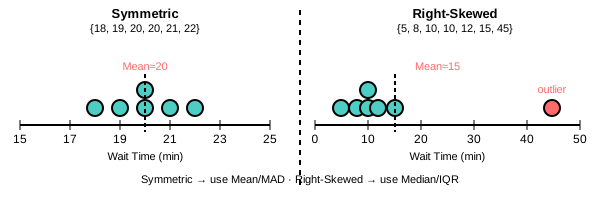
A dot plot shows waiting times (minutes) at a dentist office: 5, 8, 10, 10, 12, 15, 45. The distribution is right-skewed due to the outlier at 45. Which pair of measures should be used?
Word Problems
Use summary statistics to answer questions about real-world data.
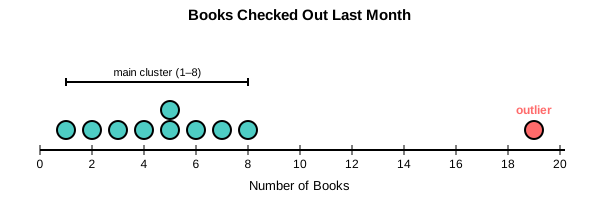
A librarian recorded how many books 10 students checked out last month: 1, 2, 3, 4, 5, 5, 6, 7, 8, 19.
The librarian wants to write a complete description of the data. Fill in: n = ̲ ̲ ̲ ̲ ̲ ̲ ̲ ̲ ̲ ̲ ̲ ̲ ̲ ̲ ̲ ̲ ̲ ̲ ̲ ̲ ̲ ̲ observations. Attribute = ̲ ̲ ̲ ̲ ̲ ̲ ̲ ̲ ̲ ̲ ̲ ̲ ̲ ̲ ̲ ̲ ̲ ̲ ̲ ̲ ̲ ̲ . Unit = ̲ ̲ ̲ ̲ ̲ ̲ ̲ ̲ ̲ ̲ ̲ ̲ ̲ ̲ ̲ ̲ ̲ ̲ ̲ ̲ ̲ ̲ .
The data is: {1, 2, 3, 4, 5, 5, 6, 7, 8, 19}. The mean is 6.0 and the median is (5+5)/2 = 5.0. The outlier is 19. Which statement is correct?
Describe one 'striking deviation from the pattern' in this data set and explain what it means in context.
Two classes each have 8 students. Their test scores are: Class A: {72, 74, 75, 76, 77, 78, 79, 81}. Class B: {40, 55, 70, 78, 80, 85, 92, 100}.
Find the mean score for Class A.
Class A range = 81−72 = 9. Class B range = 100−40 = 60. Both classes have similar means (~76). What does this tell you about the two classes?
Find the Mistake
Each problem shows a student's work with an error. Find and explain the mistake.
Sorted data: {10, 14, 18, 22, 26, 30}
Student's work:
"There are 6 values (even). The median is the middle value. The middle is the 3rd value = 18. Median = 18."
What mistake did the student make?
A data set of house prices in a neighborhood (in thousands): {120, 135, 140, 145, 150, 155, 160, 850}.
Student writes: "The mean is $231,875. This is the best measure of the typical house price."
What error did the student make in choosing the mean?
Challenge Problems
These problems require multi-step reasoning and complete statistical summaries.
A data set of 7 students' heights (cm): {148, 150, 152, 155, 158, 162, 195}. (a) Compute the mean and median. (b) Which is more representative of a typical student's height, and why? (c) What is the striking deviation, and what might explain it?
Explain in your own words why the MAD is always greater than or equal to 0, and when MAD = 0. Give an example data set where MAD = 0.